Back to Journal
Back Where the Cowboys Rode
By Roland Schaefli
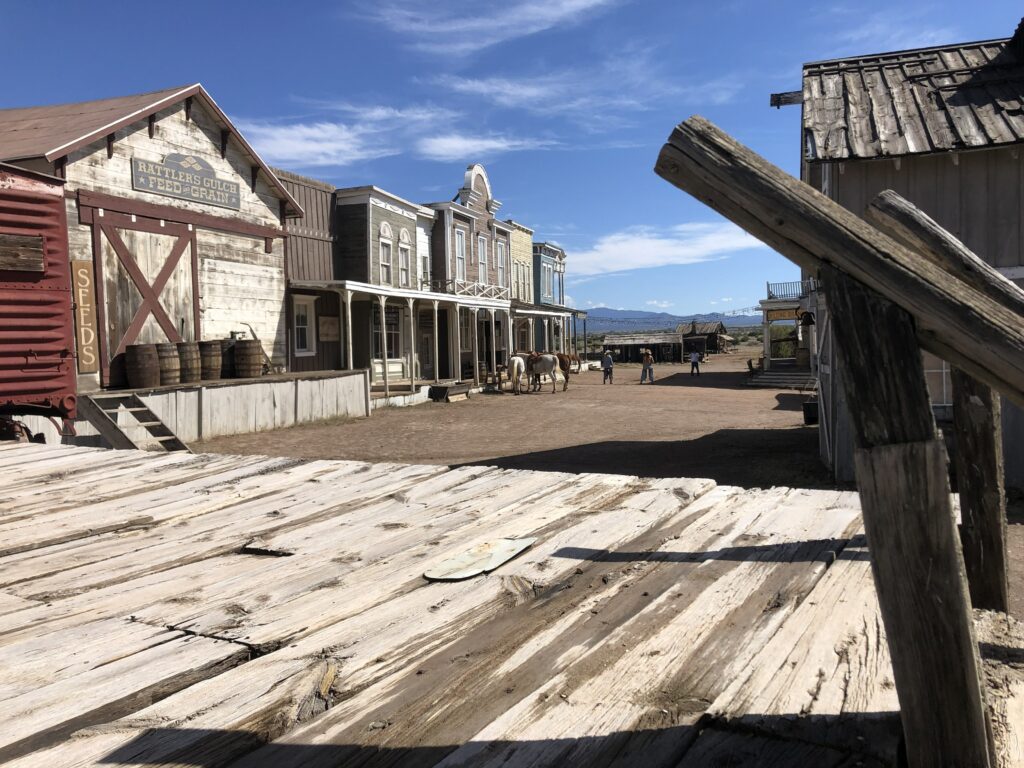
Dakota, for The Cowboys. This is where John Wayne’s young cowhands finally
drive his herd to market after completing the cattle drive without him. (photo:
Roland Schaefli)
More than half a century after «The Cowboys» drove John Wayne’s herd into Belle Fourche, the John Wayne Journal followed his trail to the old Eaves Movie Ranch outside Santa Fe. The Western town is still standing. After years of weathering the New Mexico sun, it is coming back to life, preparing for a new generation of Westerns.
When Movie Towns Disappear
Many of the old Western movie towns are already gone. In The Cowboys, Wil Andersen rides into Buckskin Joe looking for cowhands to hire. This movie set, built in 1957 and later a popular tourist attraction, was bought up by a billionaire in 2010, dismantled and hauled away.
But while some of the West’s most familiar movie locations have disappeared, the Western itself makes an unexpected comeback. Yellowstone led the charge, followed by shows such as Ransom Canyon and the Little House on the Prairie reboot. Buckskin Joe is gone, but the other town seen in The Cowboys is still standing. Just outside Santa Fe, the Eaves Movie Ranch has survived—and the Western’s comeback is giving the historic movie town a new lease on life. Built for the 1970 James Stewart-Henry Fonda Western The Cheyenne Social Club, only a year later Cheyenne became the town of Belle Fourche, South Dakota—the destination where John Wayne’s young cowhands finally bring the herd in.
John Wayne Comes to New Mexico
The picturesque clouds in the blue sky over Santa Fe had already appeared in a John Wayne film: for Flying Tigers (1942), Republic’s special effects artists traveled there specifically to film model aircraft against that natural backdrop. But The Cowboys was John Wayne’s first location shoot in the “Land of Enchantment”—and he loved every minute of it: “This has been the most refreshing location I’ve been on in more than forty years of moviemaking. Usually, you end up with the same old bunch of actors, the same old pack of tall tales and lies. But this one is different.” ¹
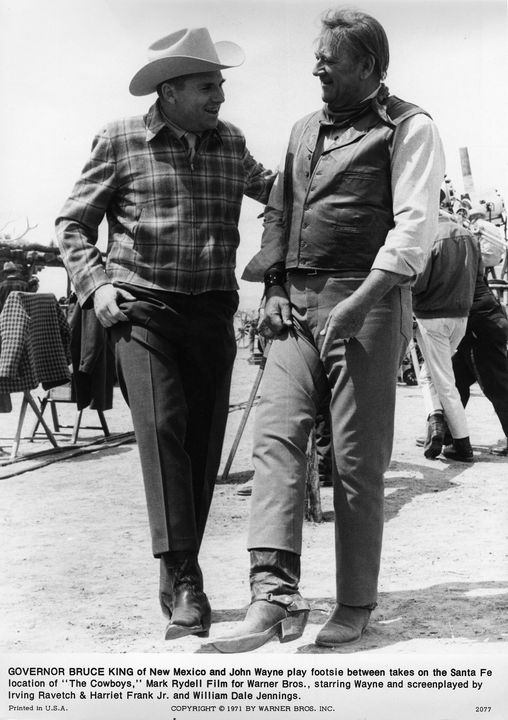
Photo © 1971 Warner Bros. Inc. All Rights Reserved.
Director Mark Rydell had found exactly the landscape he was looking for on the San Cristobal Ranch, 28 miles from Santa Fe, where the production rented land for the cattle-drive scenes. “Amazing location we were on,” Rydell later recalled. “He built the ranch on this incredible spot where you could see for fifty miles in every direction, without seeing a telephone pole or anything.” ²
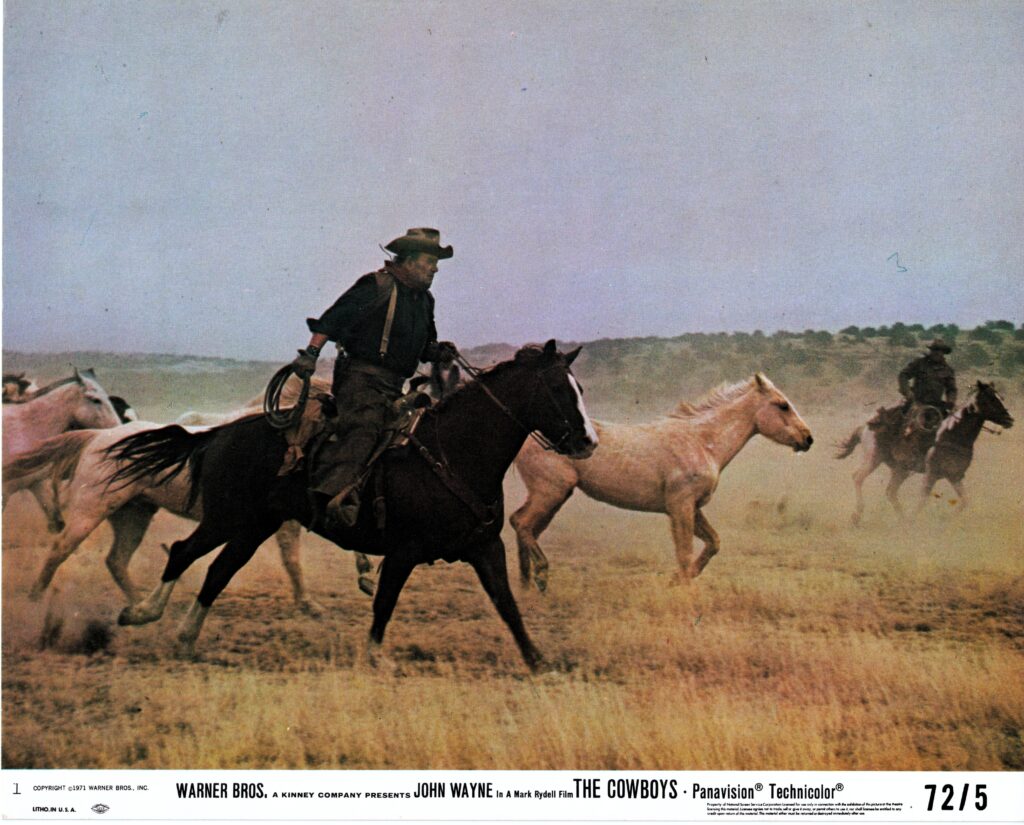
Clint Mortenson knows the San Cristobal Ranch firsthand. He has helped round up cattle there and often rode past the ruins of what had once been John Wayne’s ranch house in The Cowboys. “There isn’t much left of it,” he says. “But it was the old ranch house, and the remains of the corrals are still over there.”
Bringing the Ranch Back to Life
By 2024, the Eaves Movie Ranch itself was showing its age. After founder J.W. Eaves died, maintaining the historic movie town had become increasingly difficult. Mortenson saw an opportunity to preserve a piece of Western film history—and made the family an offer.
Mortenson’s first gig as a stunt rider took him to Disneyland Paris in 1992, performing alongside buffalo in Buffalo Bill’s Wild West Show—a performance this writer happened to catch. He’s still fond of buffalo: he bottle-fed his ranch pet «Clyde» from the age of two weeks.
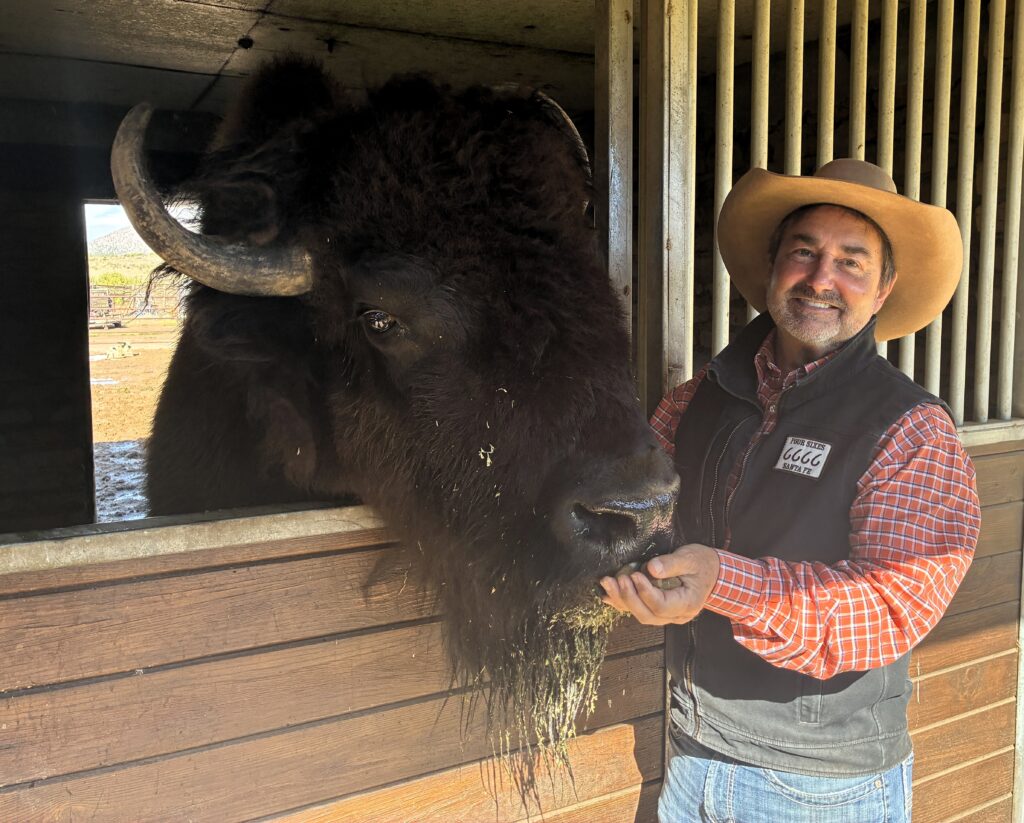
Mortenson has created saddles and horse gear for clients around the
world—including a custom saddle for President George W. Bush. (photo:
Roland Schaefli)
The main street from The Cowboys is still recognizable, although every production altered the town – or even painted in brighter colors, like for 2018’s The Ballad of Buster Scruggs. The blacksmith shop, where the poignant scene was filmed in which the boys order a gravestone for their mentor, is still standing. Robert Carradine, who made his film debut as Slim in The Cowboys, returned to the ranch just last year, shortly before his passing—his first visit since making the film as a boy.
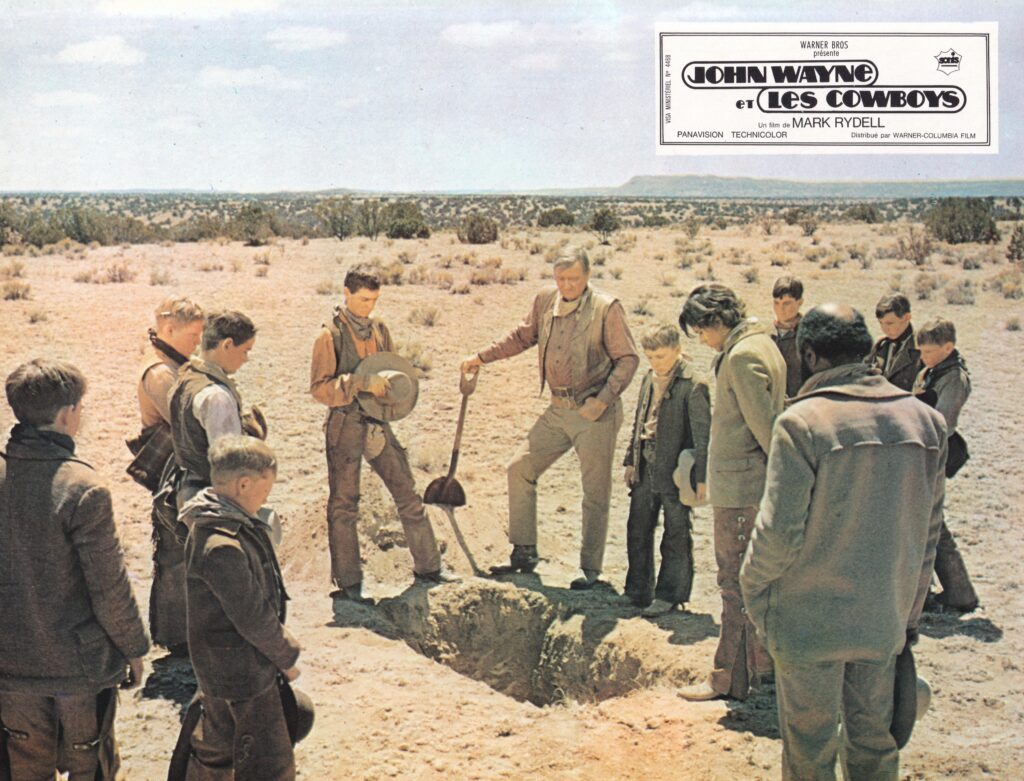
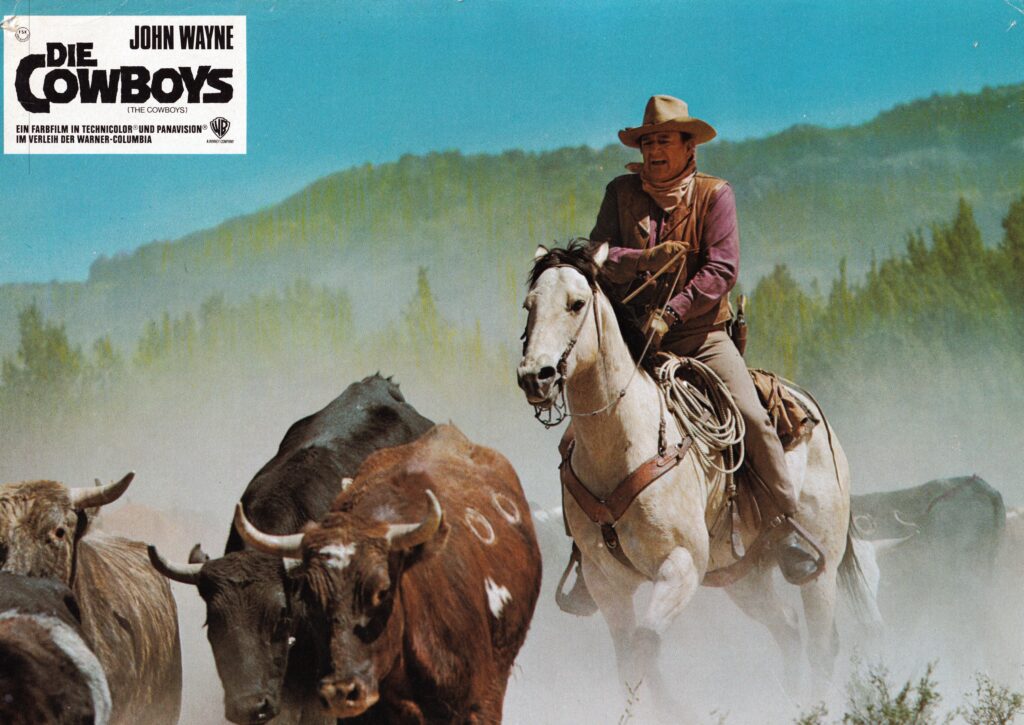
Santa Fe. This French lobby card reveals another bit of international Wayne
history: in France, the film was released as John Wayne et les Cowboys.
The Cameras Are Rolling Again
The timing of Mortenson’s restoration is just right. Productions spent some $327 million in the state during the 2026 fiscal year, while major studios have been scouting locations for upcoming projects. During John Wayne Magazine’s visit, that revival was already happening right on the ranch: a new movie starring Michael Keaton was shooting on the set. Wes, one of Mortenson’s ranch hands, offered another measure of the production’s impact: “They have great catering!”
And more Westerns may soon be riding into Eaves. “I talked to the people from Young Guns 3, and they want to look at the ranch,” Mortenson says. The connection would be fitting: Patrick Wayne played Pat Garrett in the original Young Guns in 1988.
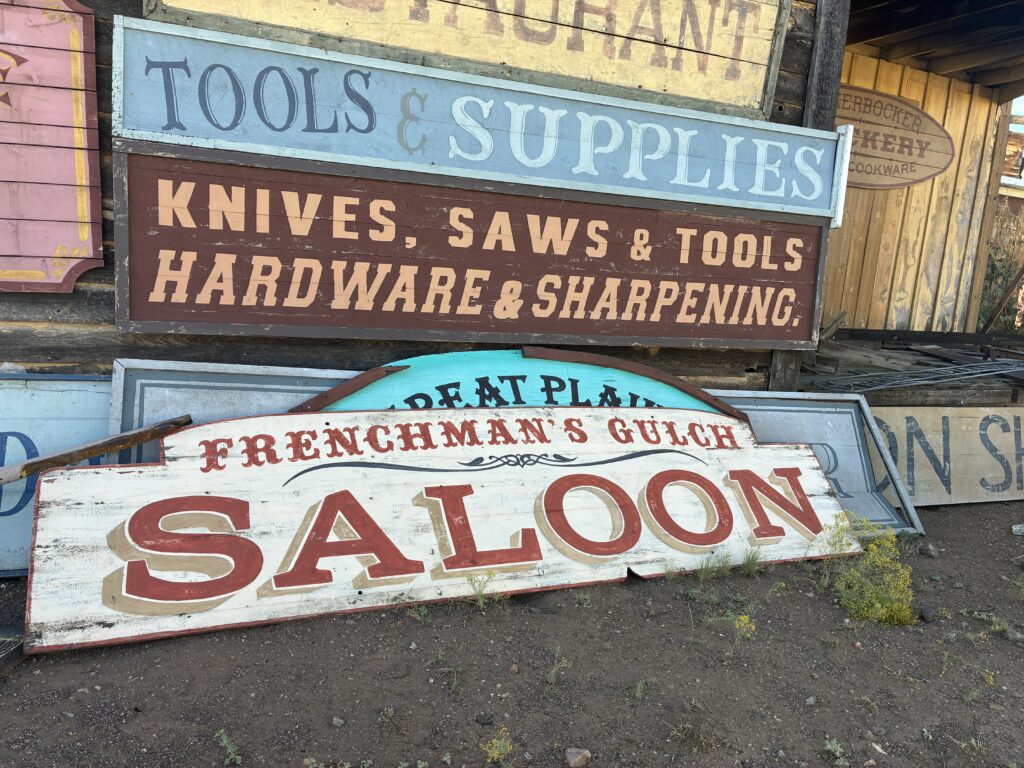
Ready for the Next Shoot-Out
Mortenson isn’t interested in simply preserving Eaves as a relic. He wants it to remain a working movie ranch. And he can offer filmmakers more than sets: his stable includes about 15 experienced movie horses, trained to rope, work around gunfire and pull wagons. His storage is also filled with Western props and equipment that have already seen service on film sets, including wagons. “They’re pretty docile,” he says of his horses.
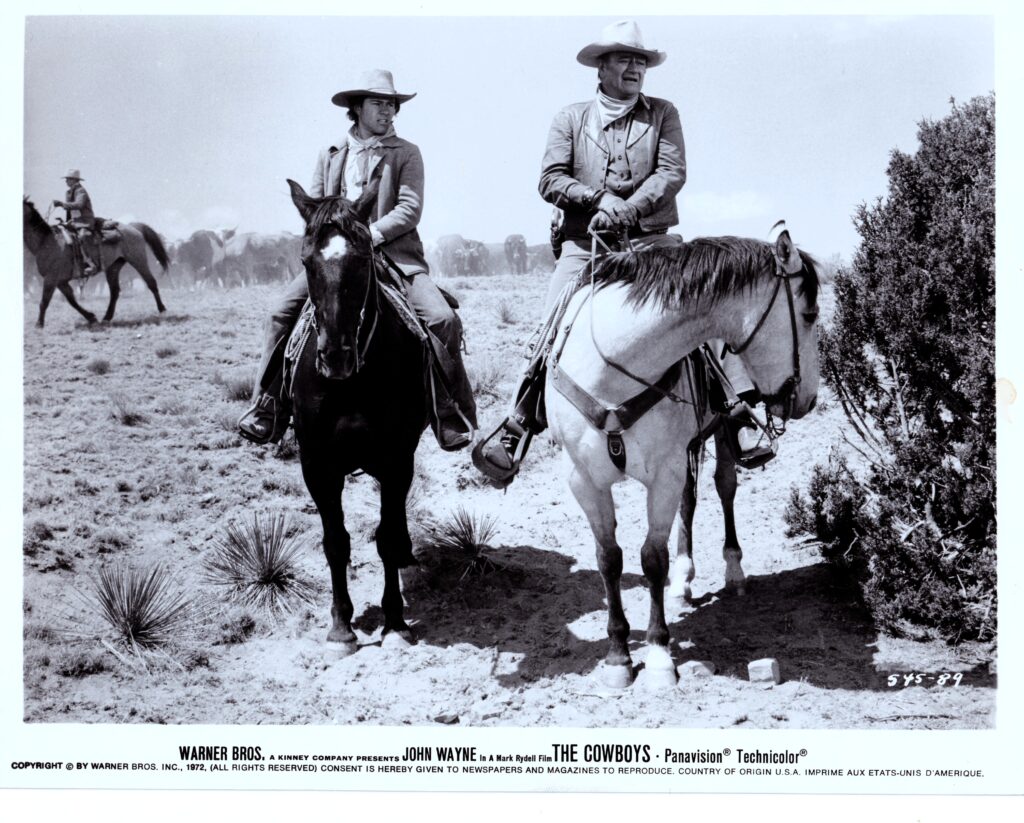
and remembered finally meeting the Duke: “I just felt like a little kid in my
pajamas. Because he’s so much bigger than life.”
His plans include improving the existing buildings and adding new ones, including a log cabin and stable, as well as developing other parts of the property. “We’re gaining a little momentum,” he says. “We’re talking to a few movies.” His goal is straightforward: “Keep improving.”
For Clint Mortenson, the Western’s latest comeback is simply another turn in a familiar cycle. “Westerns, I think, will always be here,” he says. “They kind of come and go.” At the ranch where John Wayne’s Cowboys finally reached the end of their trail, another generation of Westerns is already saddling up.
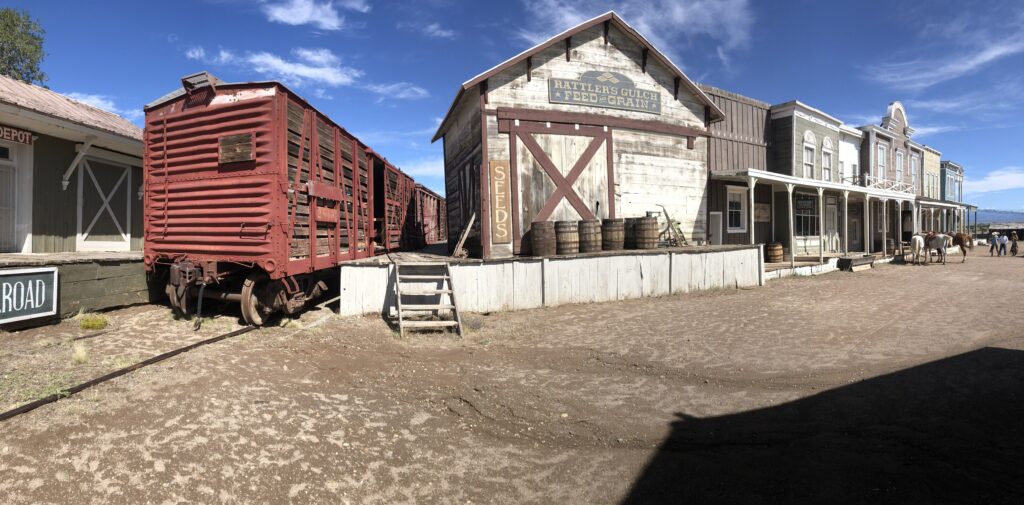
by rail. More than half a century later, the railroad tracks and cattle cars are
still in place. (photo: Roland Schaefli)
¹ Shepherd/Slatzer/Grayson, Duke: The Life and Times of John Wayne (Magna Print Books, 1985), 485.
² Mark Rydell, audio commentary, The Cowboys, Warner Bros. DVD release.